
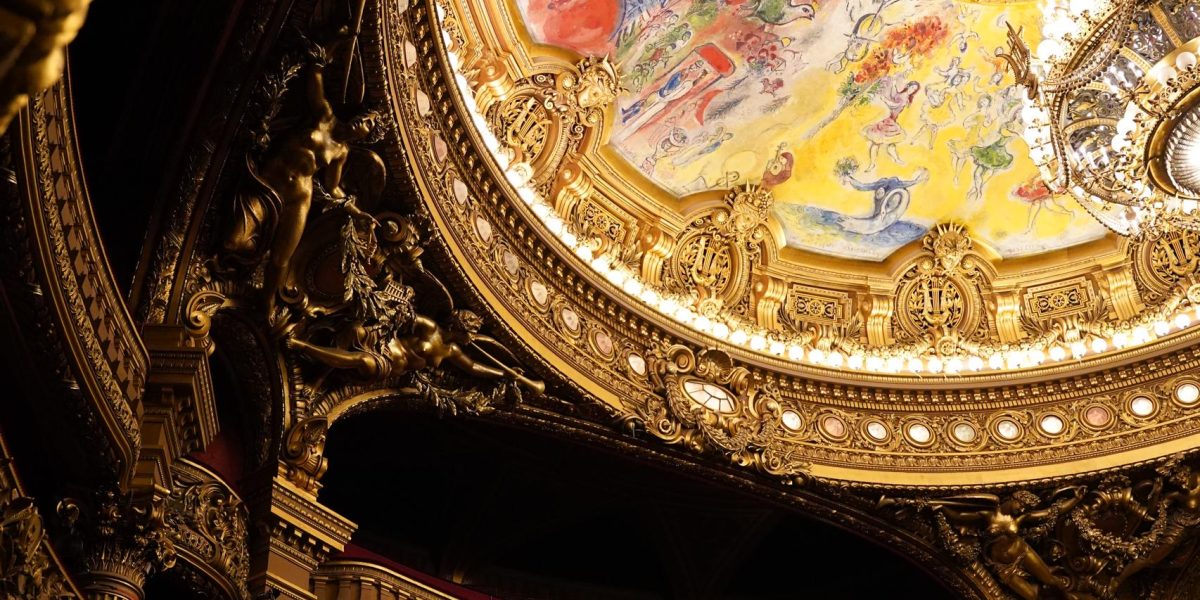
The Palais Garnier isn’t just a theater, it’s a heartbeat in marble, a whisper of elegance frozen in time.
Built in 1875 by Charles Garnier under Napoleon III, it was imagined as a stage for grandeur itself, a place where every footstep mattered.
Every staircase was carved to dramatize an entrance, every gilded detail an invitation to dream. The velvet curtains seem to hum with anticipation, the chandeliers shimmer with secrets of past performances, and the mirrors reflect more than faces; they echo ambitions, passions, and fleeting moments of inspiration.
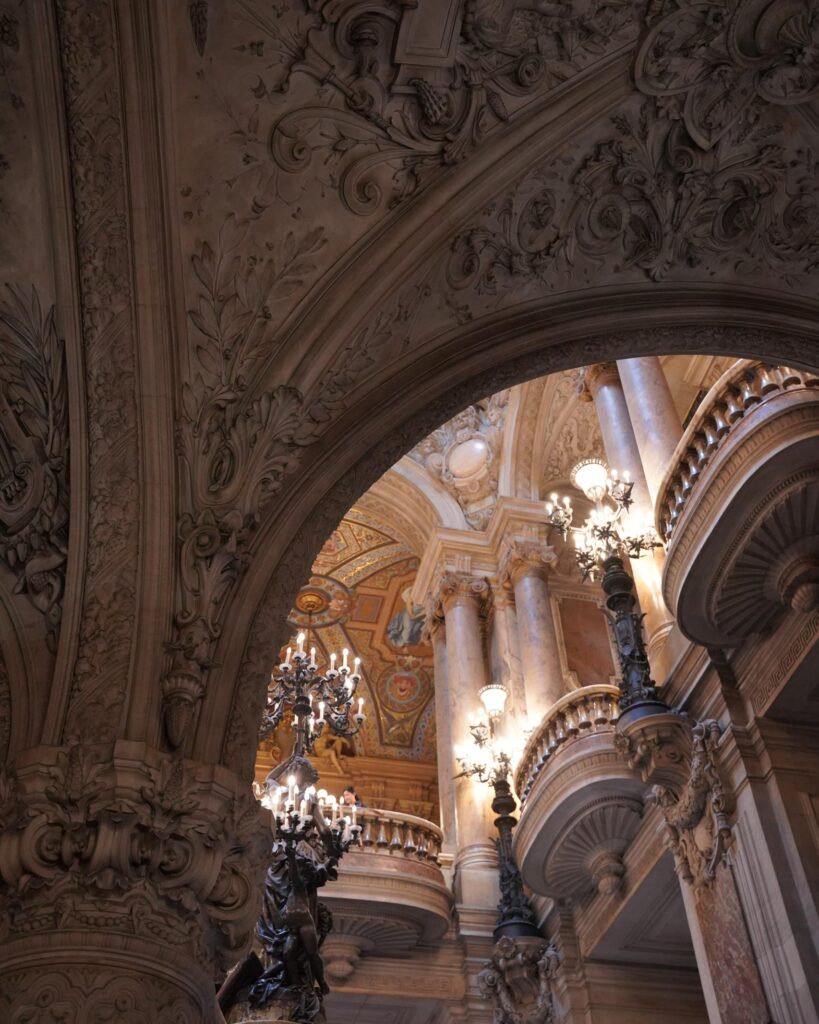
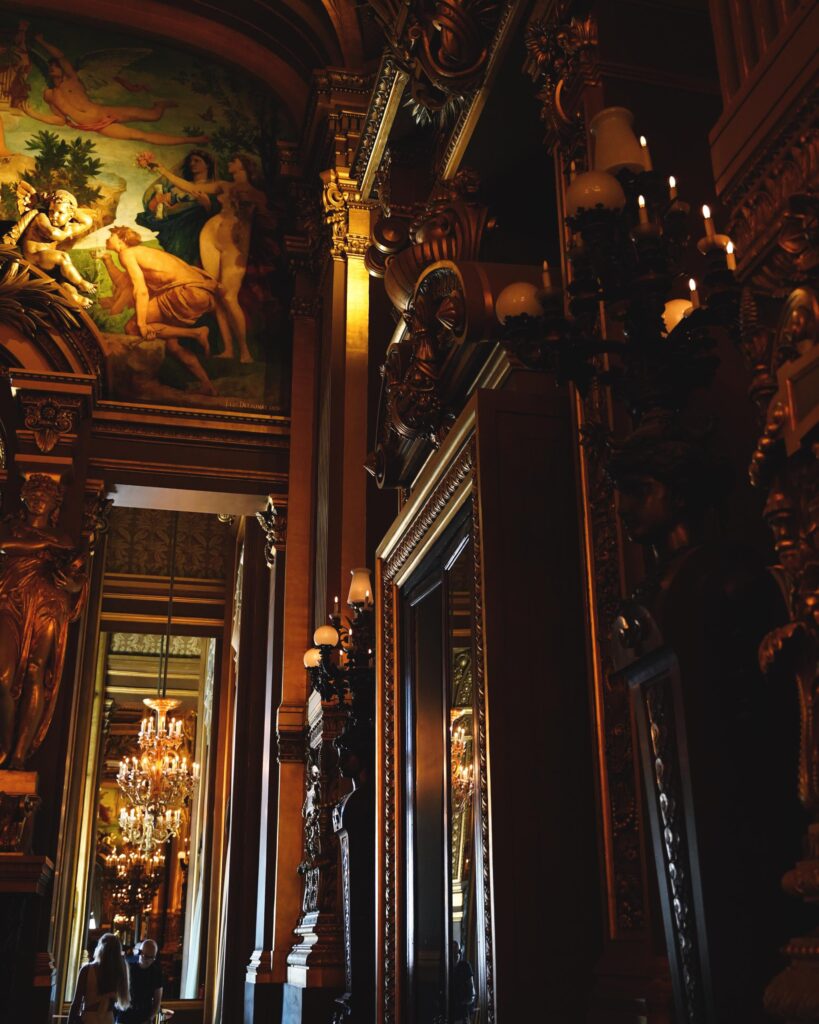
From its monumental façade adorned with caryatids and golden muses, to its grand marble staircase spiraling upward like an invitation to ascend into beauty, the Palais Garnier was built to astonish. It is said that Garnier drew inspiration from Italian Baroque theaters and the splendor of the French court, blending them into a style that came to define the very essence of Second Empire opulence.
Inside, light dances across gilded moldings, crimson velvet, and polished mirrors that have reflected more than faces; they have captured eras, emotions, and the ephemeral pulse of performance itself.
“Every masterpiece begins as a space that dares to hold silence.”
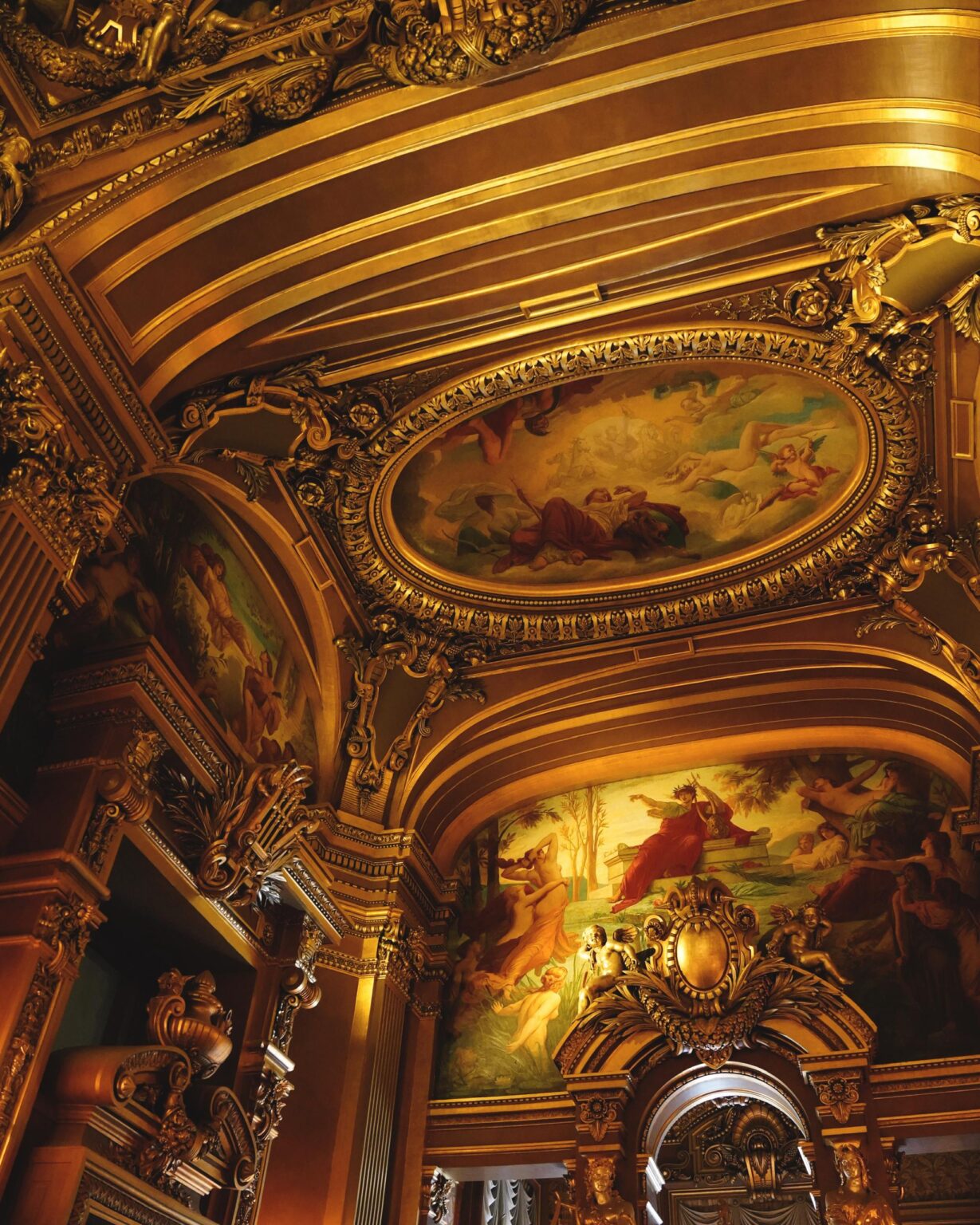
The grand staircase, with its luminous marble and sweeping balustrades, was designed as a theater before the theater, a stage upon which the Parisian elite could display their elegance long before the curtain ever rose. Every architectural detail, from the frescoes by Paul Baudry to the sumptuous ceiling later painted by Marc Chagall, whispers of an age when art was synonymous with reverence, and beauty was an act of devotion.
Beneath its great chandelier, once the heaviest in the world, hangs the weight of centuries of passion and perfection. I stood there, gazing upward, wondering how many artists had once done the same: ballerinas rehearsing under flickering candlelight, composers pacing in restless creation, poets lost in the echo of arias that outlived them all. The air seemed to hum with invisible music, with the breath of ghosts who refused to leave because the stage still remembers their names.

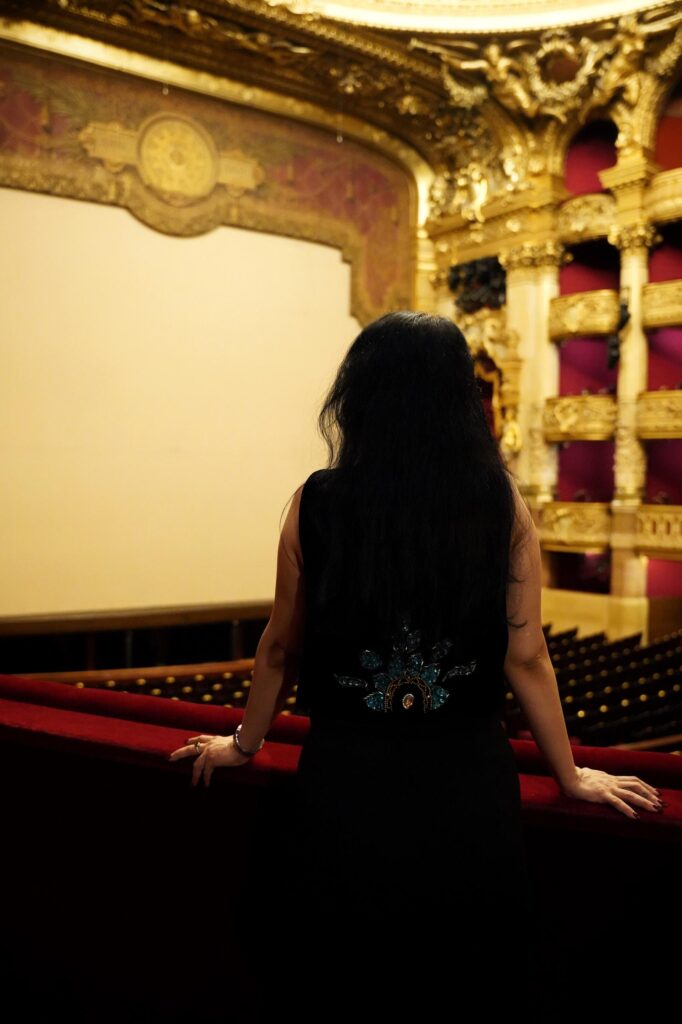
Perhaps that is the true magic of the Palais Garnier; it transcends time. It is more than architecture; it is a vessel of memory. Within these walls, art does not end when the curtain falls. It lingers, suspended in the glitter of chandeliers and the silence of marble corridors. It reminds us that art is not about performance alone, it is about presence, about the soul that remains when applause fades and the audience has gone home.
Standing there, I realized that the Palais Garnier is not simply a monument to Parisian luxury; it is a sanctuary for the human spirit, a place where creativity becomes eternal. And as the echoes of music dissolved into the night, one truth became clear: art, in its purest form, is the most exquisite form of remembrance.


