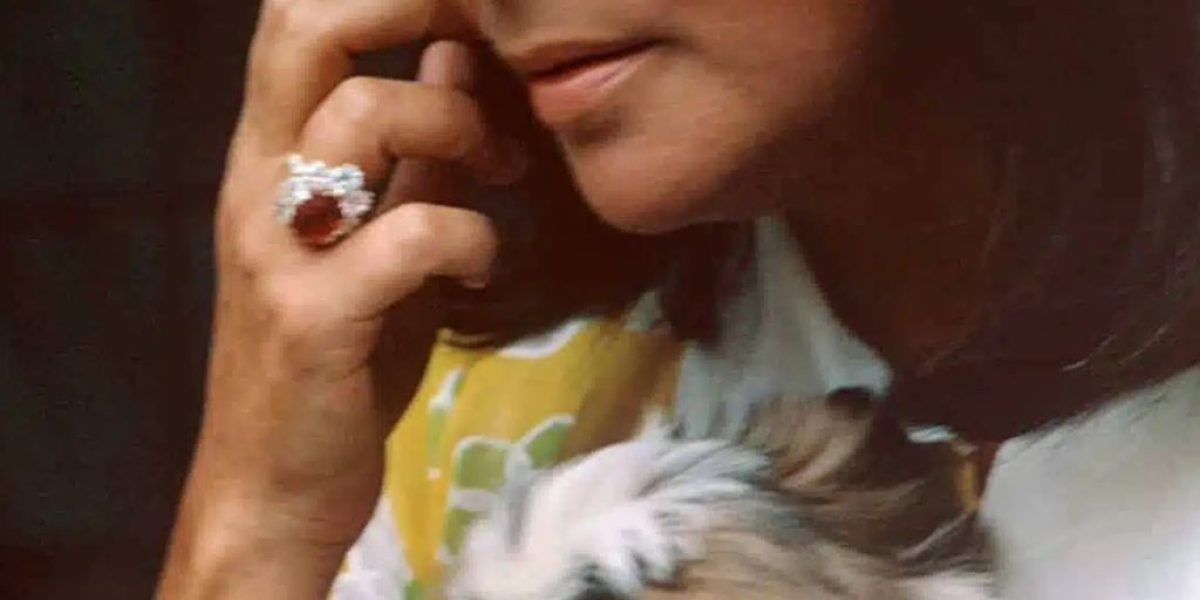
Rubies have always carried weight. From the earliest legends, they were never treated as decorative stones but as objects of power, protection, and desire. Ancient stories described rubies as petrified drops of dragon’s blood, hardened by time but still burning from within. This belief shaped how civilizations approached the stone. Rubies were not admired from a distance; they were worn, embedded, and engraved into life itself.
Across Asia, rubies circulated through trade routes centuries before diamonds dominated global jewelry culture. Along China’s northern Silk Road, rubies were exchanged as early as 200 BC. Their value was so extreme that legend claims Kublai Khan once offered an entire city in return for a single large ruby. Chinese noblemen set rubies into their armor, trusting the stone to shield them in battle. Others placed rubies beneath the foundations of buildings, believing they could stabilize fortune itself.
The stone’s symbolism developed alongside its physical presence. Red, the color of blood, was understood as life, vitality, and continuity. Rubies became associated with love and commitment, not because they were gentle, but because they were intense. Ancient texts describe rubies as warm stones, capable of holding fire. Greek legends claimed their heat could melt wax. In Burma, warriors embedded rubies into their skin, convinced the stone would grant invincibility. These beliefs persisted for centuries, reinforcing the idea that rubies were not passive objects but active forces.
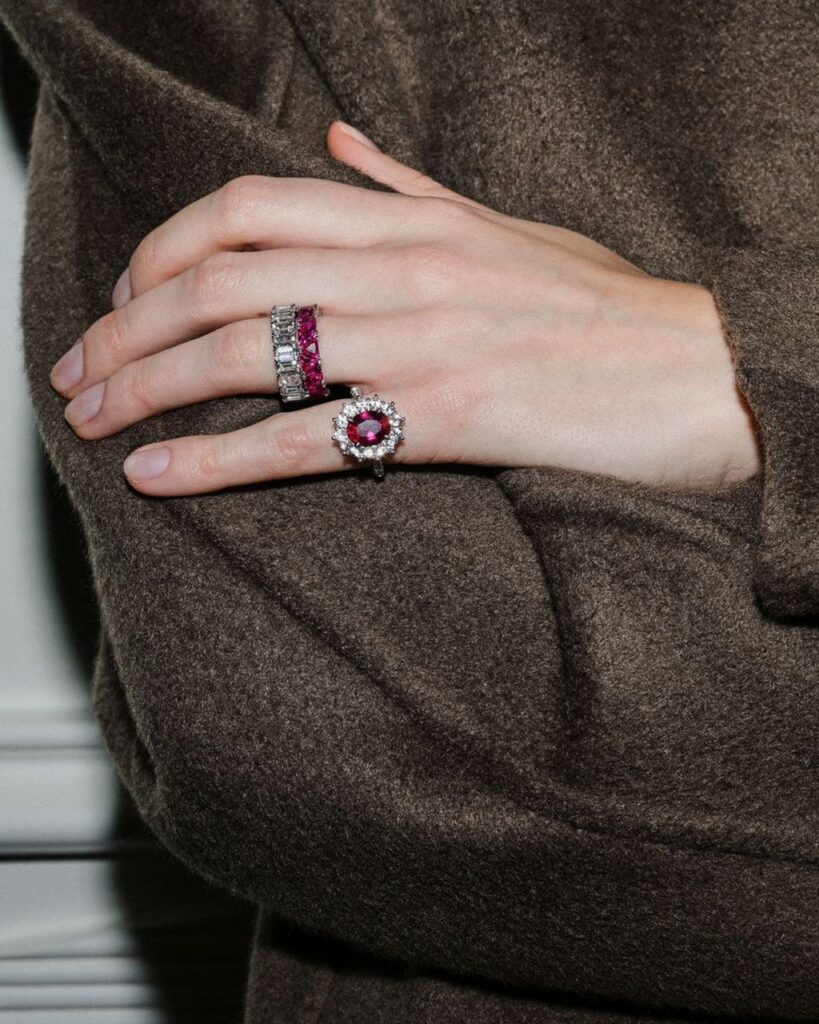
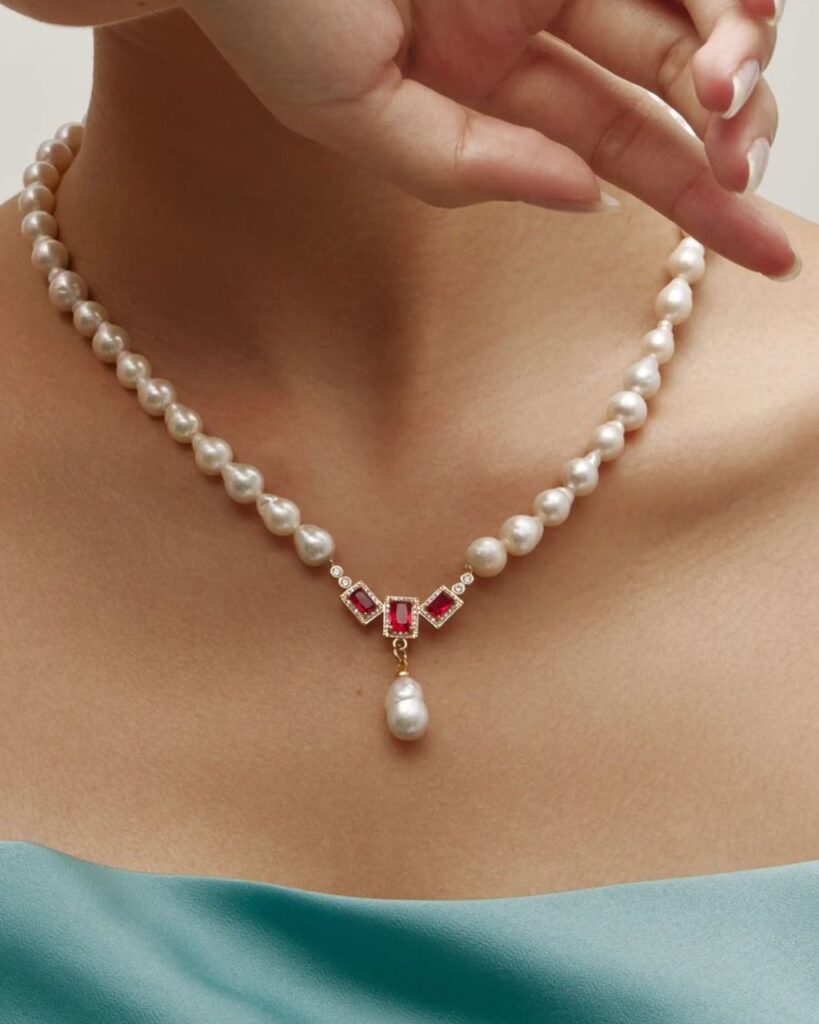
From a material perspective, ruby is the red variety of corundum, the same mineral family as sapphire. The boundary between pink sapphire and ruby has always been fluid, often determined by depth of color rather than strict chemistry. The most prized rubies display a saturated red known as pigeon’s blood, a vivid tone with a subtle blue undertone that enhances depth and intensity. This color has become the benchmark by which all rubies are judged.
Rubies formed deep within the earth, and many retain visible growth lines that record changes in pressure and environment during their creation. Some stones display a rare phenomenon known as asterism. When cut as cabochons, star rubies reveal a six-rayed star under direct light, caused by needle-like inclusions aligned within the crystal. Stones with strong color and a centered star are among the rarest forms of ruby.
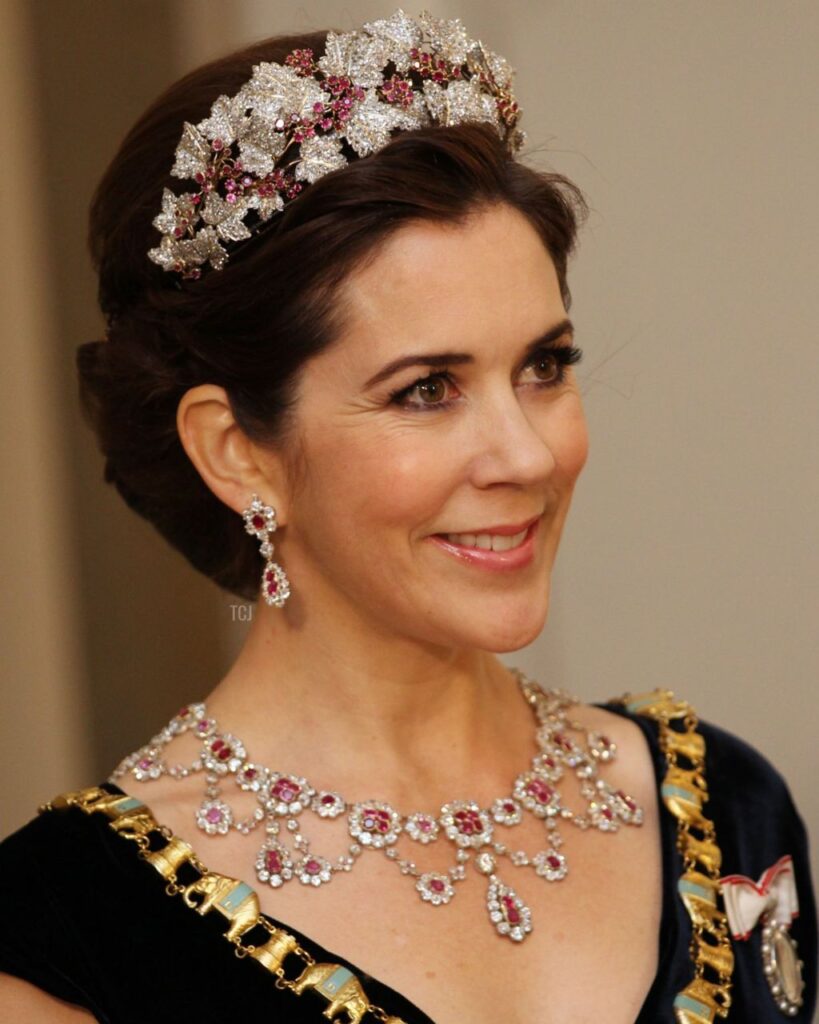
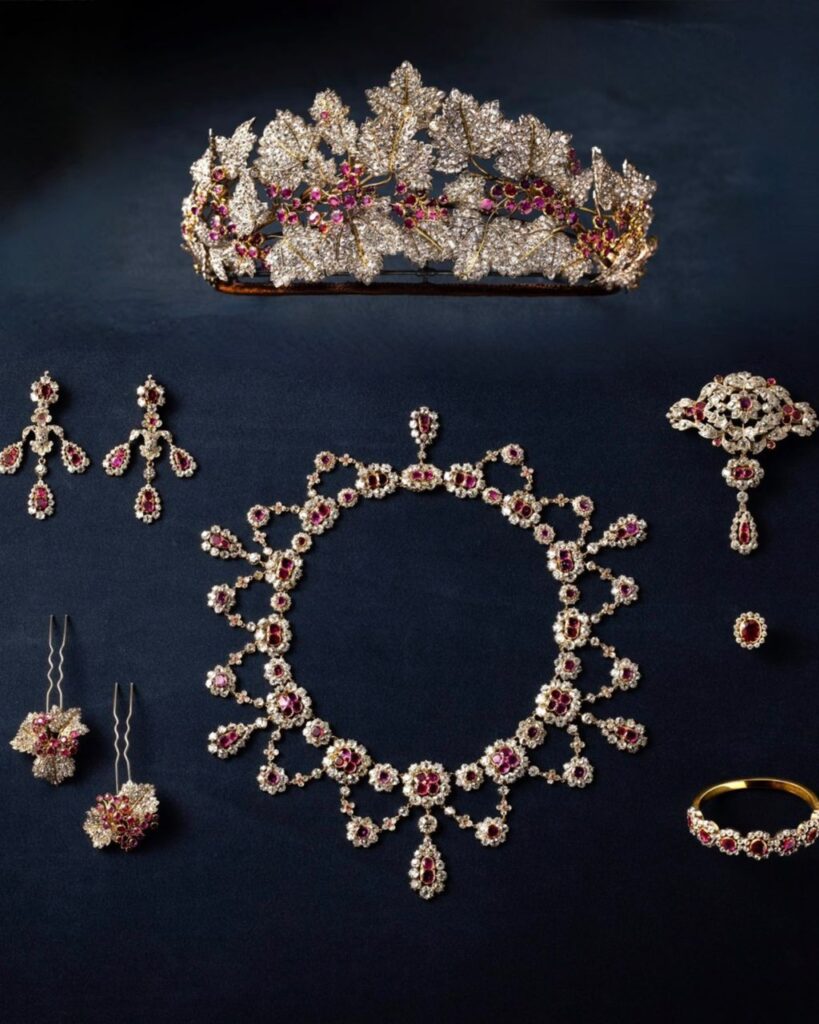
History has preserved certain rubies not only for their beauty, but for their stories. Another extraordinary example is Denmark’s ruby parure, a complete set of royal jewelry whose story begins in 1804 at the coronation of Napoleon.
To elevate the ceremony, Napoleon provided funds for his marshals to commission new jewels for their wives. One of them, Jean-Baptiste Bernadotte, ordered a ruby parure for his wife, Désirée Clary. At the time, they were commoners.
History took an unexpected turn. Bernadotte was later chosen as heir to the Swedish throne, and Désirée became Queen. In 1869, the parure entered the Danish royal family when Princess Louise received it as a wedding gift upon marrying “the future King Frederik the Eighth of Denmark”. The rubies echoed the red of the Danish flag, making the gift both personal and symbolic.
The centerpiece of the parure is the tiara, decorated with diamond-set leaves and ruby “berries.” “The rubies are lighter in tone, closer to pink than deep red, and set in halo frames”. Over time, the structure of the parure evolved. Originally, the leaf elements were worn as hair ornaments. and were only incorporated into the tiara in 1898. The set underwent restorations in 1947 and again in 2010, making it more versatile and easier to wear. Today, it belongs to Crown Princess Mary of Denmark.
These royal pieces show how rubies adapt across time. They move from personal gifts to ceremonial symbols, from private ownership to public legacy. Rubies are not static objects; they change context while retaining their presence.
Rubies are not simply jewelry. They are records of where they came from, who owned them, and why they were chosen. Color, origin, cut, and setting all contribute to the story a ruby carries. To understand rubies is to understand why red has never faded from the language of power.
If it sparks something in you, you already know where it goes.