Some interiors are decorated, and there are interiors that define the way a space is experienced. Art Deco belongs entirely to the second category. It does not exist to soften a room or to make it more pleasant. It exists to impose order, to establish presence, and to translate the idea of luxury into something precise, almost architectural in its clarity.
When Art Deco was first presented to the world at the Exposition Internationale des Arts Décoratifs et Industriels Modernes, it did not arrive as a gentle evolution of taste. It arrived as a statement. Europe had moved through a period marked by excess ornamentation and emotional design, followed by instability and disruption. What emerged from that context was not a desire for more decoration, but a demand for structure. Art Deco answered that demand by redefining beauty as something disciplined.
This is why the style continues to hold relevance. It is not nostalgic. It is systematic.
To understand Art Deco, it becomes necessary to place it in contrast with what came before it. The fluidity of Art Nouveau dissolved form into movement, allowing lines to drift and surfaces to feel almost alive. Art Deco refused that softness. It introduced edges where there had been curves, symmetry where there had been freedom, and control where there had been expression. It treated the interior not as a canvas for emotion, but as a composition to be constructed.
What makes this transformation significant is not simply visual. It reflects a deeper shift in how environments were understood. After periods of uncertainty, people do not look for decoration. They look for stability. Art Deco provided that stability through geometry. Lines became directional. Shapes became intentional. Every element was placed in relation to another, creating a system in which nothing felt accidental.
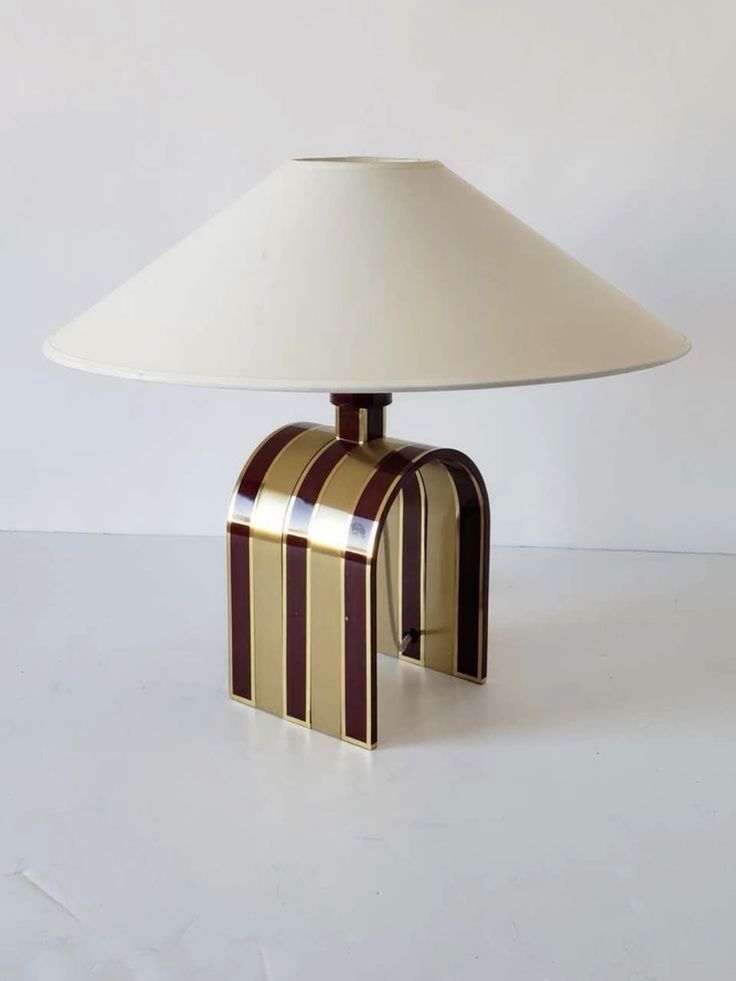
The influences behind this language are often described as diverse, but their role is more disciplined than that description suggests. The discovery of Tutankhamun’s tomb did not simply introduce Egyptian motifs into European design. It introduced a new way of thinking about form, verticality, repetition, and symbolic clarity. Similarly, the influence of African and pre-Columbian art was not absorbed as decoration, but translated into pattern systems and structural rhythm. Art Deco does not collect references; it refines them.
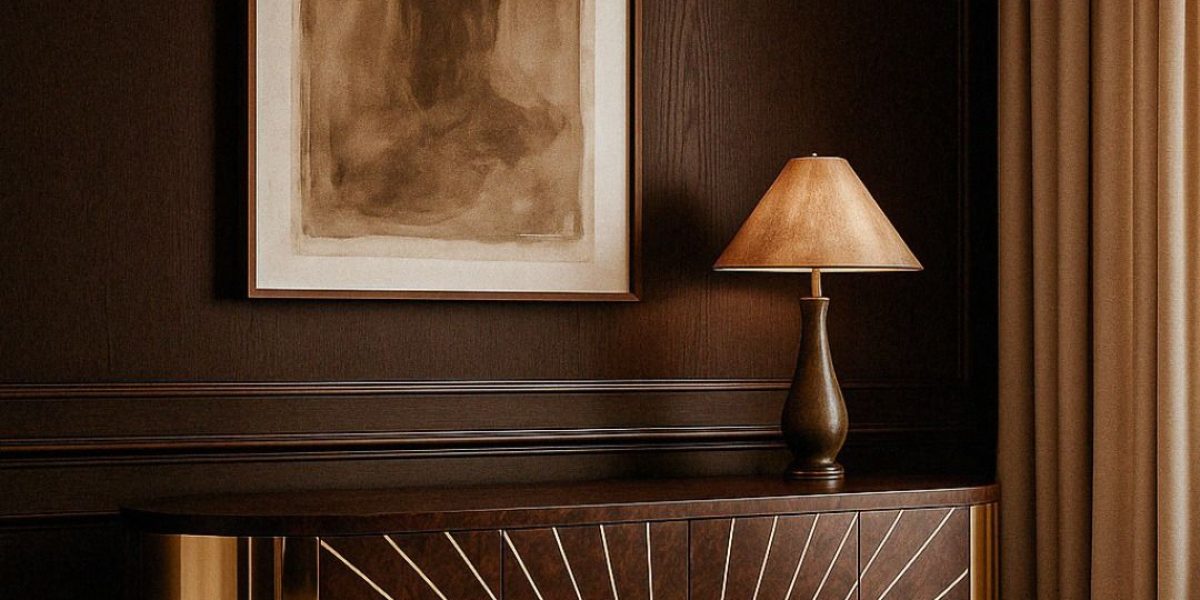
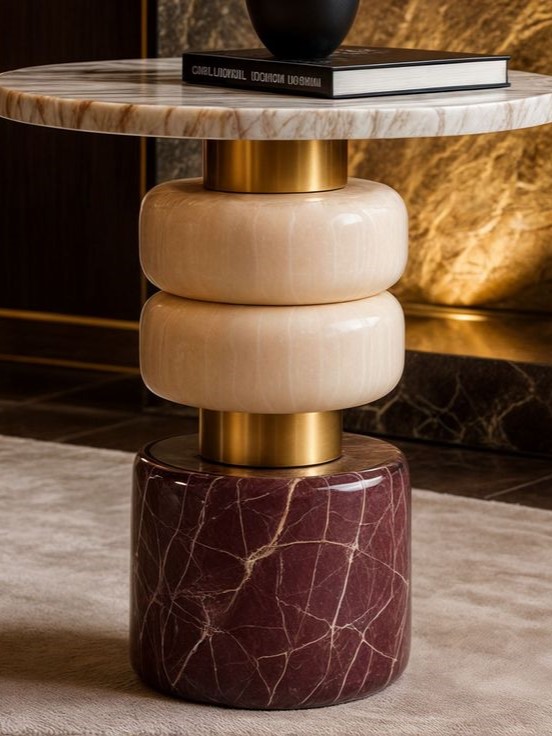
Material becomes the next layer through which this refinement is expressed. In an Art Deco interior, materials are never incidental. Velvet is not chosen for comfort alone, but for the way it absorbs light and creates density within a space. Marble is not decorative; it anchors the room with a sense of permanence. Lacquer sharpens surfaces, removing irregularity and emphasizing precision. Metals, whether chrome, brass, or gold, act almost like lines drawn across the composition, defining edges and reinforcing structure.
What distinguishes a refined Art Deco interior from an imitative one is the control of these materials. Too much variation weakens their impact, yet too little reduces the space to monotony. The balance must be deliberate. Luxury, in this context, is not a matter of richness alone. It is a matter of calibration.
Color follows the same logic. It does not behave emotionally; it behaves hierarchically. Dark tones such as black, deep blue, or green establish depth and define the space. Lighter tones, ivory, cream, muted neutrals, exist to create relief, allowing the eye to rest without losing orientation. Metallic accents do not dominate, but they articulate, highlighting the structure that already exists. When color is used without hierarchy, the result is visual competition. When it is controlled, the result is coherence.
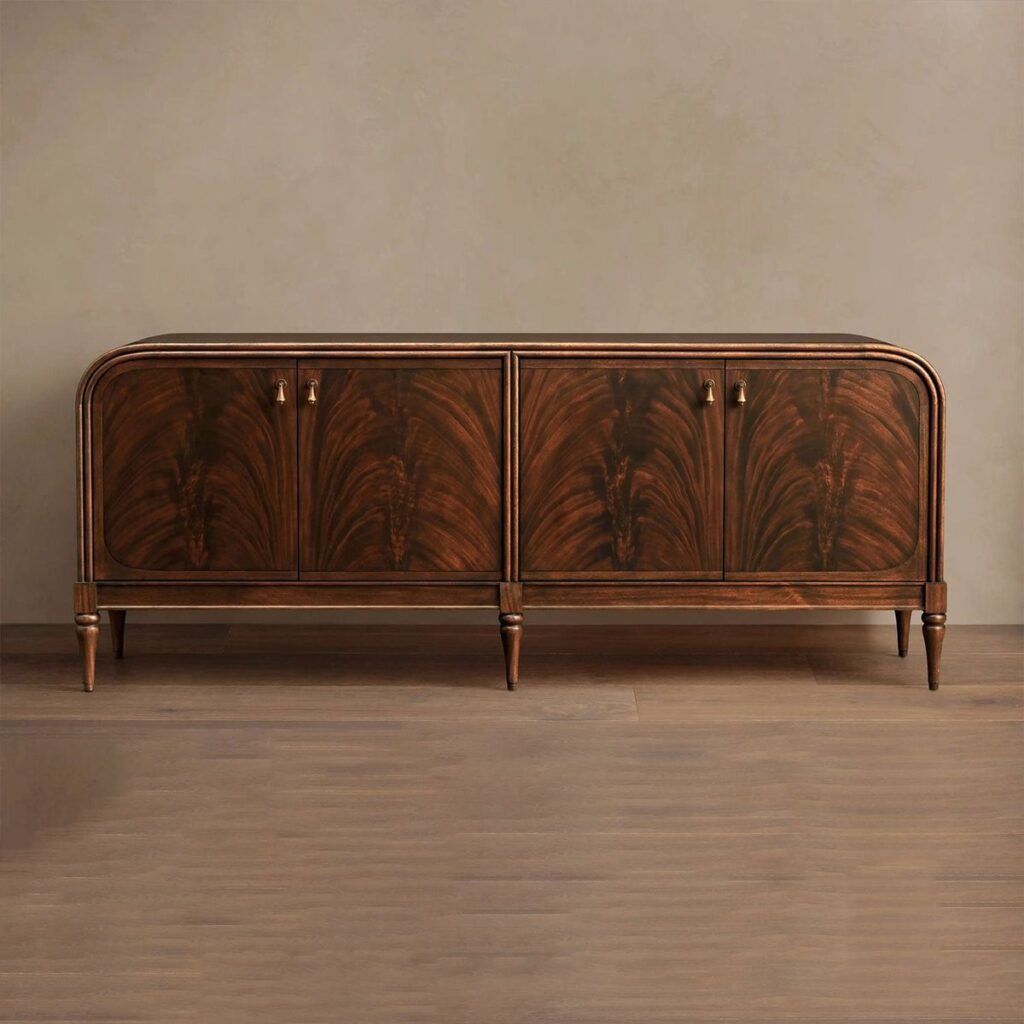
Lighting, perhaps more than any other element, reveals the true intelligence of Art Deco. It is not treated as an afterthought or a purely functional addition. It is positioned as a central component of the composition. A chandelier defines the vertical axis of a room, anchoring the space from above. Wall sconces create rhythm along surfaces, repeating patterns that reinforce order. Table lamps introduce localized intensity, drawing attention to specific areas without disrupting the overall balance. The materials used—glass, chrome, crystal—do not simply emit light; they shape it, reflecting and refracting it in ways that contribute to the structure of the room itself.
Within this framework, furniture does not exist independently. It participates in the system. Pieces are selected for their geometry, their proportions, and their relationship to the space around them. A sofa is not placed arbitrarily; it anchors. A console does not fill a gap; it defines a line. Decorative objects are kept to a minimum, and when present, they are chosen with precision. Redundancy is avoided because repetition without purpose dilutes the clarity of the composition.
What becomes particularly interesting in the contemporary context is how Art Deco has been adapted rather than replicated. Modern interiors rarely attempt to recreate the full theatricality of the 1920s and 1930s. Instead, they extract the principles and apply them selectively. A single geometric mirror, a lacquered surface, or a carefully chosen lighting fixture can establish the presence of Art Deco without overwhelming the space.
This selective approach reflects a broader evolution in the understanding of luxury. Where earlier interpretations relied on accumulation, contemporary design leans toward reduction. The emphasis shifts from how much is present to how precisely it is arranged. In this sense, Art Deco aligns naturally with modern sensibilities, because its core principles—structure, hierarchy, and control—are inherently adaptable.
An interior influenced by Art Deco succeeds when it feels resolved. Not decorated, not styled, but complete. Every element must appear necessary. Every material must justify its presence. Every line must contribute to the overall composition.
This is where Art Deco separates itself from trend-driven design. It does not depend on novelty. It depends on clarity.
And clarity, unlike fashion, does not expire.
If it sparks something in you, you already know where it goes