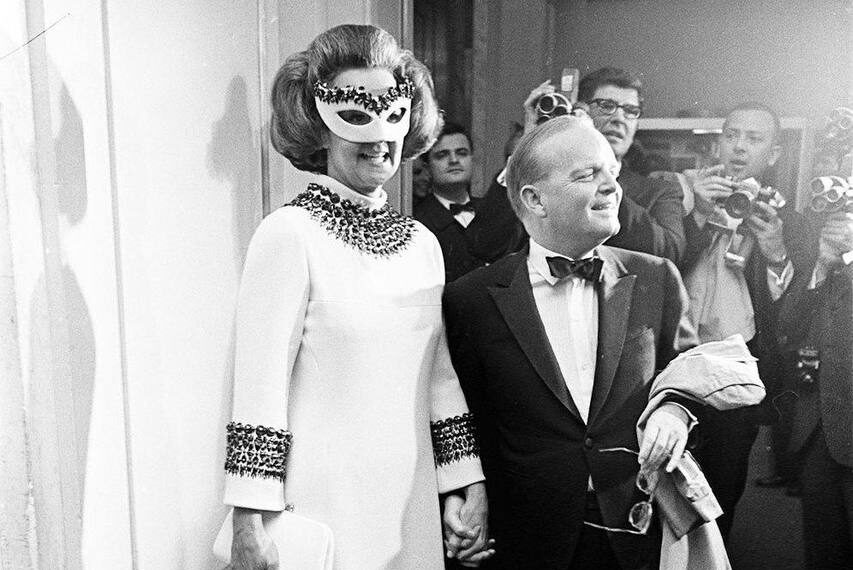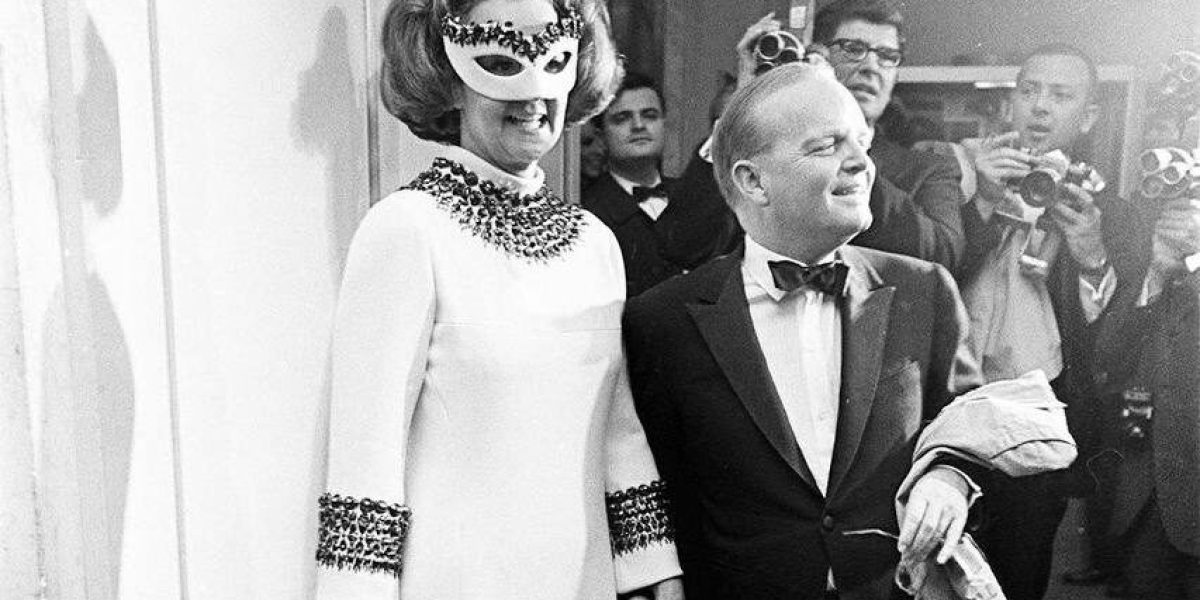
History usually remembers Truman Capote’s Black and White Ball through photographs. Black masks, white gowns, crystal chandeliers suspended above the Plaza Hotel ballroom, European aristocrats standing beside Hollywood actresses, editors speaking with diplomats, and society women whose names would eventually become inseparable from the mythology of twentieth-century elegance. Fashion magazines have revisited the evening countless times, fascinated by the couture, the guest list, and the extraordinary spectacle of one of the most exclusive social gatherings ever organized. Yet what makes the Black and White Ball remarkable today is not only who attended, but how unexpectedly history chose its most important guest.
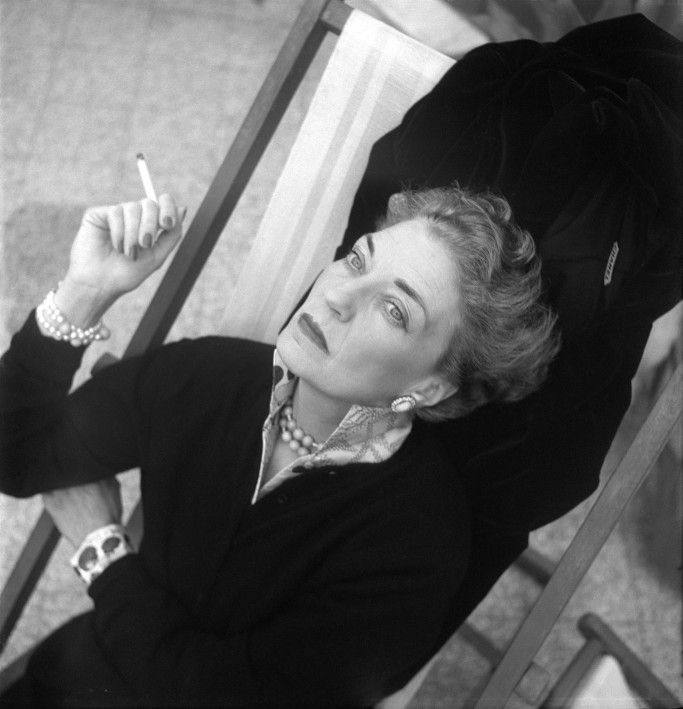
Among women celebrated for beauty, inherited fortunes, impeccable wardrobes, and carefully cultivated social influence stood someone who appeared almost out of place. Katharine Graham was not known as one of Truman Capote’s glamorous swans. She was not a fashion icon in the traditional sense, nor was she a woman who built her public image around parties, jewels, or society columns. She represented another kind of elegance entirely, one grounded in education, restraint, observation, and an intelligence that was still quietly discovering its own authority. What makes her presence particularly fascinating is that she herself later admitted she never fully understood why Capote had invited her as the guest of honor. He famously described the evening as “the nicest party, darling, you ever went to,” yet Graham questioned his explanation for years. In her memoir she suggested she had never needed cheering up, nor did she entirely believe that Capote had organized the evening for the reasons he claimed. Some historians have argued that she represented a strategic choice, a respected public figure capable of balancing the extraordinary collection of glamorous personalities surrounding her. Others have proposed something more intuitive, suggesting that Capote possessed an unusual instinct for recognizing cultural importance before it became obvious to everyone else. Whatever his motivation, the invitation now appears almost prophetic, because the woman entering the Plaza Hotel that November evening had not yet become one of the most influential figures in modern journalism. She was still standing at the threshold of her own transformation.
Katharine Meyer Graham entered the world in 1917 surrounded by privilege so extraordinary that it would have seemed almost impossible for anyone to imagine her lacking confidence. Her father, Eugene Meyer, was one of America’s most influential financiers before purchasing The Washington Post during a bankruptcy auction in 1933, transforming a struggling newspaper into what would eventually become one of the most respected journalistic institutions in the world. Her mother, Agnes Meyer, occupied a similarly remarkable position within American intellectual life. A writer, political activist, philanthropist, and passionate supporter of the arts, Agnes cultivated friendships with figures whose names now belong to history itself, including Albert Einstein, Marie Curie, Eleanor Roosevelt, Thomas Mann, and countless politicians, scientists, philosophers, and artists who regularly moved through the Meyer household. To outside observers, Katharine’s childhood appeared almost impossibly fortunate. Wealth, education, influence, and intellectual stimulation surrounded her from the very beginning.
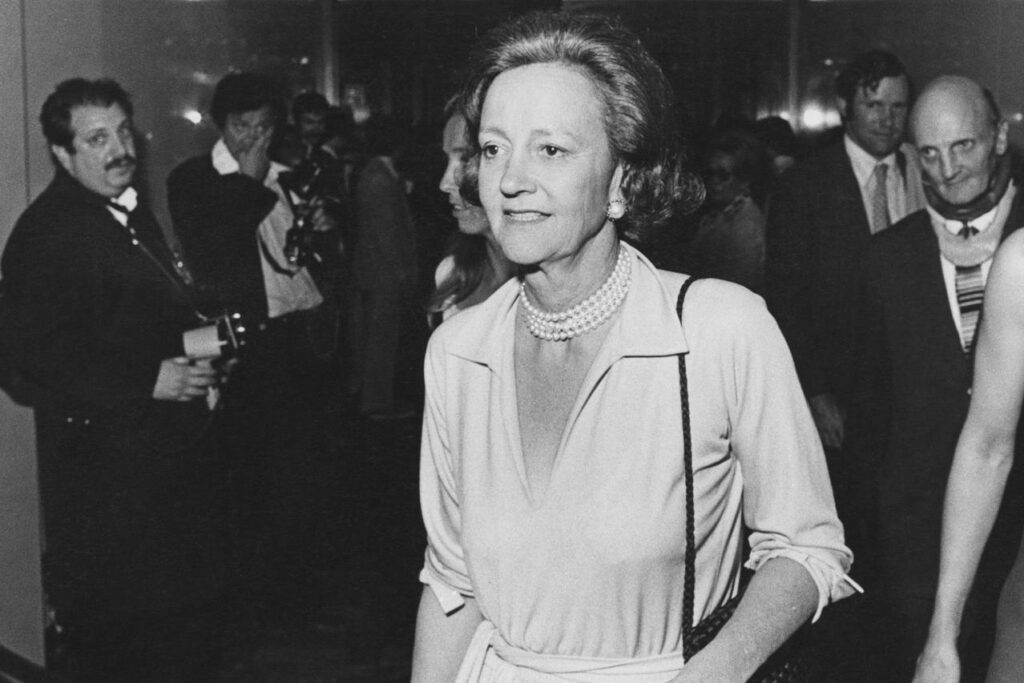
Yet private reality rarely resembles public appearances.
In later years, Graham described a childhood shaped less by affection than by distance. Her parents travelled constantly, entertained endlessly, and devoted enormous energy to public life, leaving much of her upbringing to governesses, tutors, and household staff. The emotional center of the family often felt strangely absent despite the extraordinary people who filled their drawing rooms. Her relationship with her mother proved especially difficult. Agnes Meyer admired brilliance and expected excellence, but praise arrived infrequently while criticism came more naturally. Graham would later write with remarkable honesty about the uncertainty that developed during those years, describing herself as painfully shy, hesitant, and frequently convinced that others possessed greater intelligence and greater capability than she did. Looking back, it becomes clear that one of the greatest misconceptions surrounding inherited privilege is the assumption that wealth automatically produces confidence. Katharine Graham’s life demonstrates the opposite with remarkable clarity. Financial security can provide education, opportunity, and social access, but it cannot teach someone to trust their own judgment. Confidence develops through experience, repeated responsibility, and the gradual realization that one’s decisions carry value. None of those qualities can be inherited.
Her marriage to Philip Graham initially appeared to reinforce every expectation surrounding elite American families during the middle of the twentieth century. Philip possessed impeccable credentials. A graduate of Harvard Law School and former clerk to Supreme Court Justice Felix Frankfurter, he was brilliant, charismatic, politically connected, and deeply admired by Eugene Meyer. When the question of succession eventually emerged, Meyer chose Philip rather than his own daughter to lead The Washington Post. The decision reflected the assumptions of the period more than the abilities of either individual. A husband, it was believed, should lead the family business. A wife should support him. Katharine, herself, accepted the arrangement with surprisingly little resistance, later admitting that she did not initially feel cheated by the decision. Such was the power of social expectation that even the biological heir to one of America’s most important newspapers struggled to imagine herself occupying its highest office.
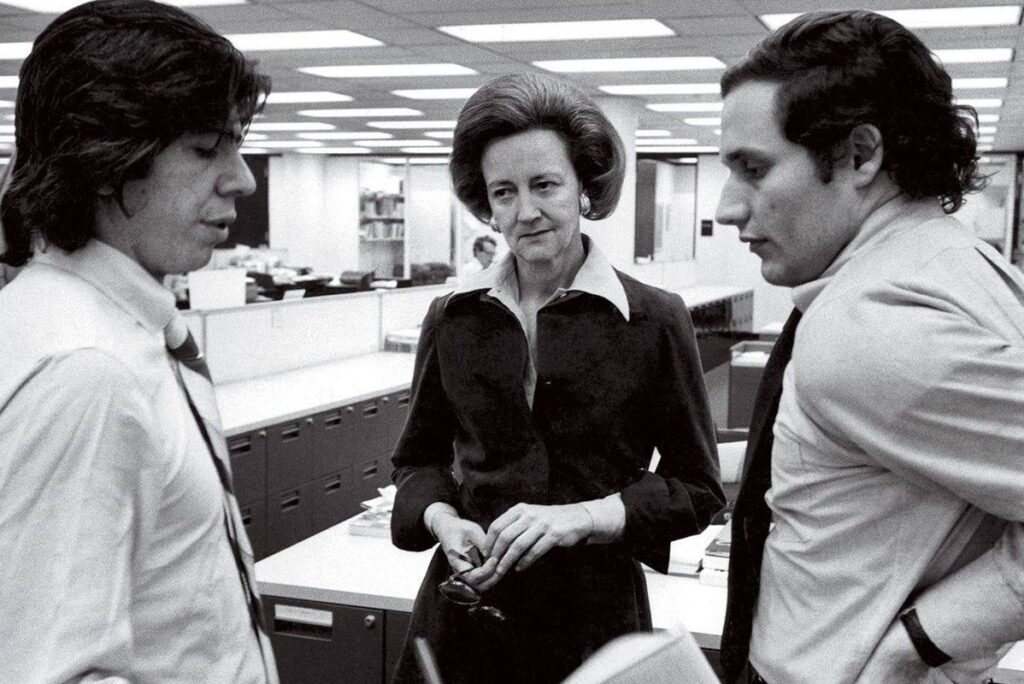
Philip Graham expanded the newspaper aggressively, acquiring television stations and Newsweek, while Katharine stepped away from daily business life to raise their four children. From the outside, they embodied post-war American success: wealth, influence, political access, intellectual prestige, and growing corporate power. Behind closed doors, however, the marriage deteriorated steadily. Philip suffered from alcoholism, periods of severe mental illness, infidelity, and increasingly unpredictable behavior. Graham later described years marked by emotional instability, public humiliation, and a gradual erosion of her confidence. Then, in August 1963, tragedy arrived with devastating finality when Philip Graham died by suicide at the family’s Virginia estate after a prolonged psychiatric crisis. Overnight, Katharine Graham inherited not only overwhelming personal grief but also the responsibility of leading one of America’s most influential newspaper companies, despite believing herself completely unprepared for such a role.
The irony defining the next chapter of her life remains extraordinary. The woman who doubted her own intelligence would eventually challenge the President of the United States. The woman who questioned whether she belonged inside corporate boardrooms would become the first female chief executive of a Fortune 500 company. The woman who entered Truman Capote’s ballroom, uncertain of her own significance, would later reshape the history of American journalism through decisions requiring extraordinary courage. None of those achievements emerged because confidence suddenly appeared. They developed because responsibility demanded action before confidence had time to arrive. Leadership became an education rather than a personality trait. Every difficult decision strengthened the next one. Every crisis quietly dismantled another layer of hesitation. By the time history introduced the Pentagon Papers and Watergate, Katharine Graham had slowly transformed from someone who questioned whether she deserved authority into someone capable of defending editorial independence against the full weight of presidential power.
Looking back, Truman Capote’s invitation acquires an entirely different meaning. The Black and White Ball gathered women who already represented established forms of glamour and influence, yet history ultimately remembers Katharine Graham because she represented something much rarer than social prestige. She embodied the possibility of becoming. While others entered the ballroom displaying identities already complete, Graham entered carrying an unfinished version of herself. Capote may have intended to organize the most glamorous party of the century, but unknowingly, he also captured one of its most remarkable transformations before the world itself understood what it was witnessing. Some women become famous because they perfectly represent their time. Others become unforgettable because they quietly change it. Katharine Graham belonged unmistakably to the second category.
If it sparks something in you, you already know where it goes