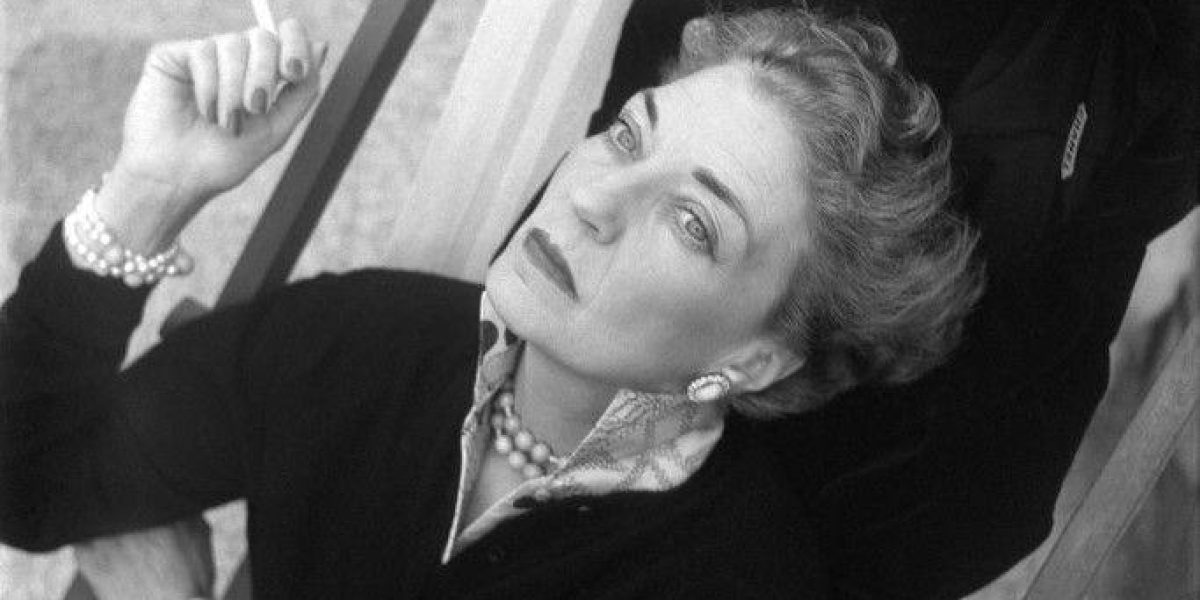
What if Salvador Dalí painted one of the most ironic portraits of you, while the rest of the world already knew you as one of the most elegant women alive, a muse to the greatest designers of the twentieth century, a woman rarely absent from Vogue pages, admired by photographers, writers, artists, and couturiers, and remembered not only for what she wore, but for the way she transformed beauty into a complete way of living?
Mona von Bismarck’s life was never a typical story of society. She moved between Europe and America, between New York, Paris, Palm Beach, and Capri, surrounded by people who shaped fashion, politics, cinema, and culture. Her circle included figures such as Paul Newman, Grace Kelly, Diana Vreeland, and the Duchess of Windsor, yet what made Mona fascinating was not only the society she entered, but the world she built around herself. She lived with beauty as a daily discipline, and every house, garden, dress, jewel, and portrait seemed to carry evidence of her eye.
Her extravagant life expanded dramatically after her marriage to William Harrison in 1926. Their honeymoon aboard Warrior, his yacht and one of the largest and most expensive of its time, marked the beginning of a lifestyle defined by travel, hospitality, and intense attention to detail. Soon, the couple divided their lives between remarkable homes: Oak Point in Bayville on Long Island, a house in Palm Beach, and Villa Il Fortino in Capri. These were not simply properties. They were stages for a life composed through taste. Mona cared deeply about her surroundings, working with decorators and artists to create interiors worthy of the people she entertained, and she brought the same seriousness to gardens, importing magnolias and roses and even arranging fresh water from mainland Italy to care for them in Capri.
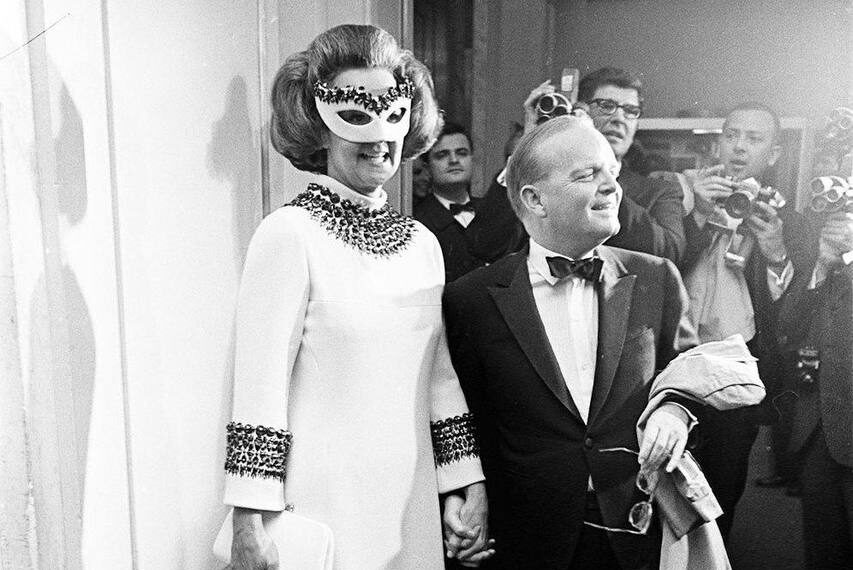
Guests remembered her houses not only for their beauty, but for their atmosphere. Jacqueline Kennedy once described a visit to Mona’s world as an experience of serenity and beauty that affected everyone deeply. That description matters, because Mona’s elegance was never limited to her wardrobe. Her houses, gardens, parties, and table settings were part of the same visual identity. She was a hostess, but also a curator of experience, and people spoke about her gatherings for years because they entered not just a home, but a fully formed aesthetic universe.
By the early 1930s, Mona’s reputation had crossed the Atlantic. Vogue described her as a New York phenomenon, with extraordinary catlike eyes, blue-grey hair, and dresses treated almost as high art. Newspapers and gazettes followed her with fascination, and in 1933 she became the first American woman to be named the Best Dressed Woman in the World by figures including Coco Chanel, Molyneux, Vionnet, Lelong, and Lanvin. The title later belonged to women such as the Duchess of Windsor and Elsie de Wolfe, but Mona’s place was distinct because her style was both glamorous and deeply selective.
Her taste was never passive. She loved bold colors, especially pink and green, and this love required confidence because strong color cannot survive without control. She owned extraordinary pieces from designers who were often also her friends: a violet lace Balenciaga dress with a dipped hem, a full-length coat appliquéd with pink organza petals and green silk taffeta leaves, a fuchsia Schiaparelli blazer with sunburst buttons, and Chanel pieces such as a velvet skirt suit with a white ruffled collar. She followed fashion, but never surrendered herself to it. She knew how to use trends without allowing them to erase her own identity.
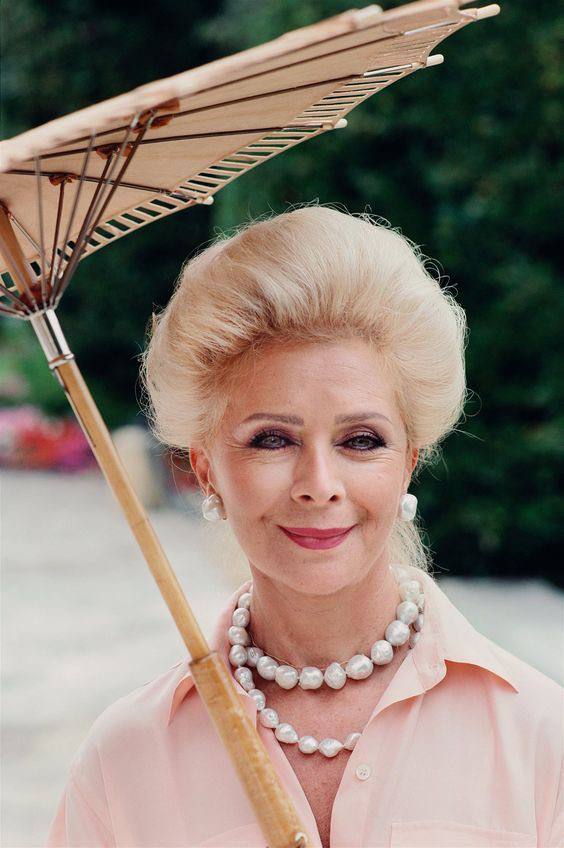
Her jewelry collection added another layer to that identity. Dresses may have made her visible, but jewels gave her image mythology. Among her pieces was a Cartier Art Deco brooch from 1925 set with jadeite, onyx, ruby, and diamond, a jewel whose colors and geometry perfectly matched her appetite for bold elegance. She also owned the extraordinary Bismarck Sapphire Necklace, now associated with the Smithsonian, as well as a refined two-strand pearl necklace likely worn for formal occasions. Another unforgettable piece was an antique pearl and diamond serpent necklace, a jewel carrying symbolic power because the serpent has long represented both healing and destruction, associated with Asclepius and Medusa, with protection and danger living inside the same form.
Like many sophisticated women of her era, Mona did not treat jewelry as fixed. She had pieces redesigned during her lifetime in order to follow fashion and keep them alive. This tells us something important about her relationship with beauty. She did not collect objects only to preserve them untouched. She allowed them to evolve with her, just as her wardrobe and houses evolved across continents and decades.
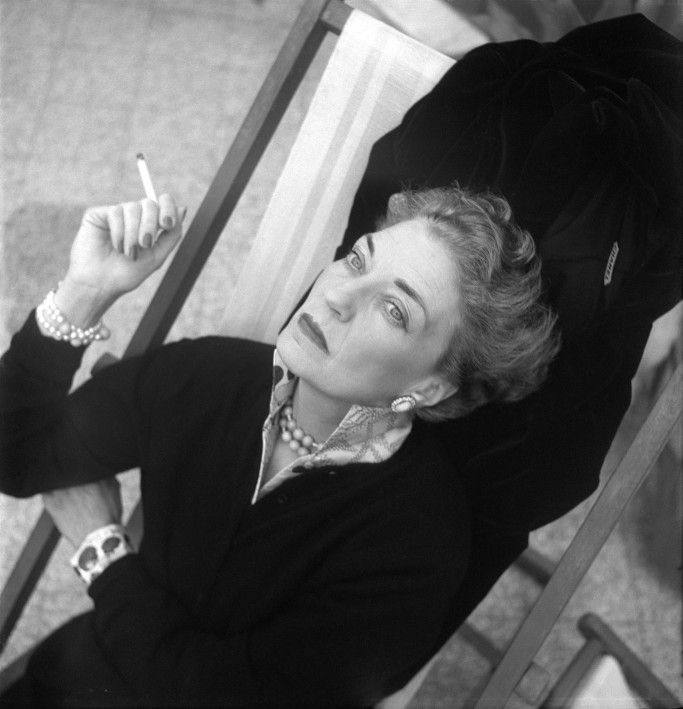
Her beauty and image were preserved by some of the greatest photographers of the twentieth century. Cecil Beaton, who considered her one of the outstanding beauties of the thirties and the epitome of taste and luxury, photographed her repeatedly. Edward Steichen and Horst also captured her world. Through these images, Mona became more than a society woman. She became a visual reference, someone whose look could travel through magazines, music, cinema, and literature.
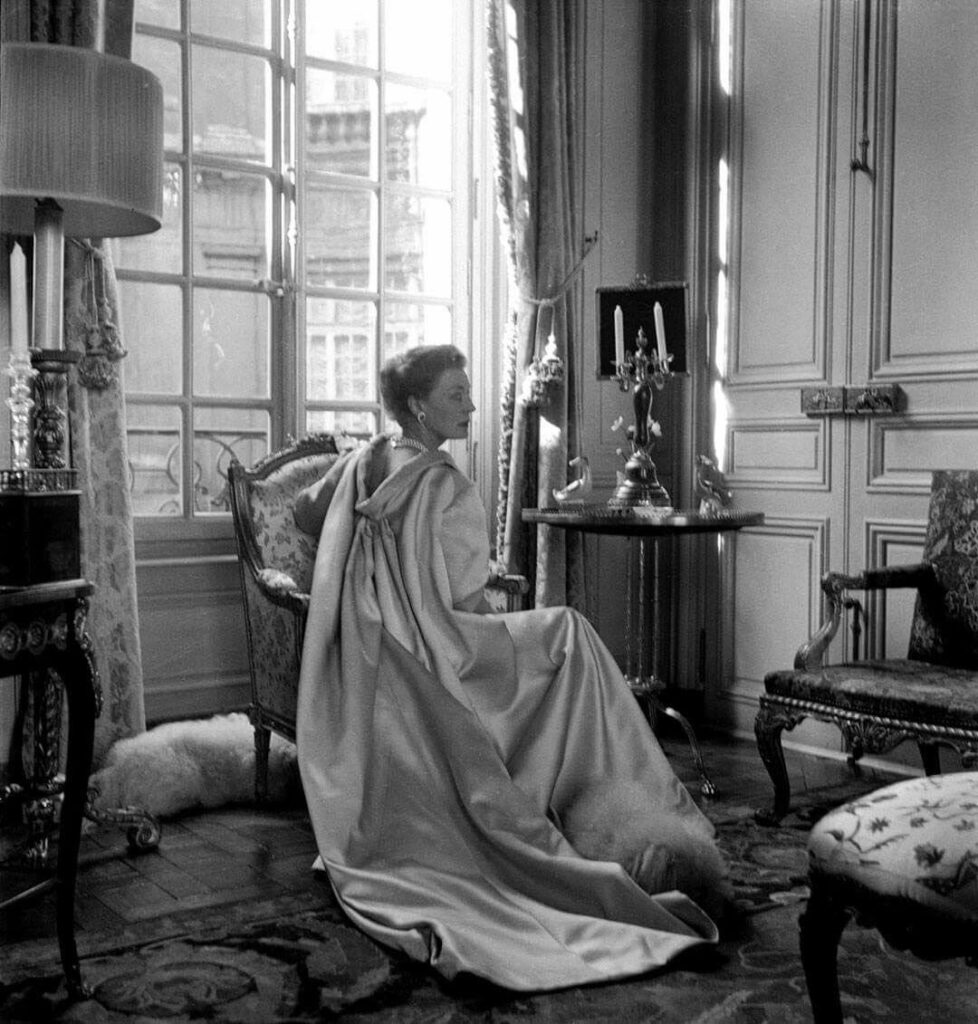
Her name entered popular culture. Cole Porter included her in song lyrics, and in the 1950 musical Ridin’ High, Ethel Merman sang, “What do I care if Mrs. Harrison Williams is the best-dressed woman in town?” This kind of reference shows how fully Mona’s reputation had entered the public imagination. She was no longer merely admired by friends or followed by society writers. She had become shorthand for elegance itself.
Yet the most complicated image of Mona came not from fashion photography, but from Salvador Dalí. In the early 1940s, she commissioned him to paint her portrait, and the result, The Kentucky Countess, became one of the strangest and most revealing episodes in her visual history. Dalí did not flatter her in the expected way. He painted her nude, and when Mona objected, he responded by covering her with black rags. The painting shows her with glowing features and maroon lips, surrounded by pyramids and unsettling symbolism, her hands curled near her chest as if holding something that is not there. It was not the comfortable portrait of a society beauty. It was ironic, strange, and psychologically sharp. Yet after the changes, she kept it on view throughout her life, which suggests that Mona understood something about beauty beyond approval. Even when challenged by the image, she lived with it.
After Harrison Williams died in 1953, Mona married Edward, Count von Bismarck, and moved more deeply into European life. In 1956, they purchased a hôtel particulier at 34 Avenue de New York in Paris, which she redecorated completely, adding yet another setting to her world of beauty and hospitality. She continued to be admired by guests such as Maria Callas, Winston Churchill, and Aristotle Onassis, and her life remained attached to gardens, jewels, couture, interiors, and refined society.
One of the most famous stories about her devotion to fashion came in 1968, when she heard that Cristóbal Balenciaga was closing his atelier forever. Diana Vreeland said Mona was so devastated that she did not leave her bedroom at her villa in Capri for three days. The story may sound theatrical, but it reveals how deeply fashion had become part of her emotional life. Balenciaga was not simply a designer she wore. His work formed part of the architecture of her image.
As Mona aged and her eyesight began to fail, she gradually withdrew from social life, which must have been especially difficult for someone whose existence had been so strongly connected to seeing, selecting, arranging, and being seen. She died in 1983 at the age of eighty-six and was buried in a Givenchy gown, a final gesture perfectly aligned with the life she had lived.
Before her death, she ensured that part of her world would survive beyond private memory. She requested the establishment of the Mona Bismarck Foundation, which later funded the Mona Bismarck American Center in Paris. She also gave paintings and cultural objects to museums and several pieces of her jewelry collection to the Smithsonian Institution, including the Bismarck Sapphire Necklace. Perhaps she wanted others to feel some part of the joy that beauty had given her throughout her life.
Mona von Bismarck was named the best-dressed woman in the world, but her legacy is larger than clothing. She understood that style could live in a dress, a garden, a jewel, a room, a portrait, and a gesture. She did not simply wear beauty. She organized her entire life around it.
If it sparks something in you, you already know where it goes.